![map[email:you@example.com name:Alex Mihnev]](/images/avatar.png)
AM-0: Welcome to my blog! 👋
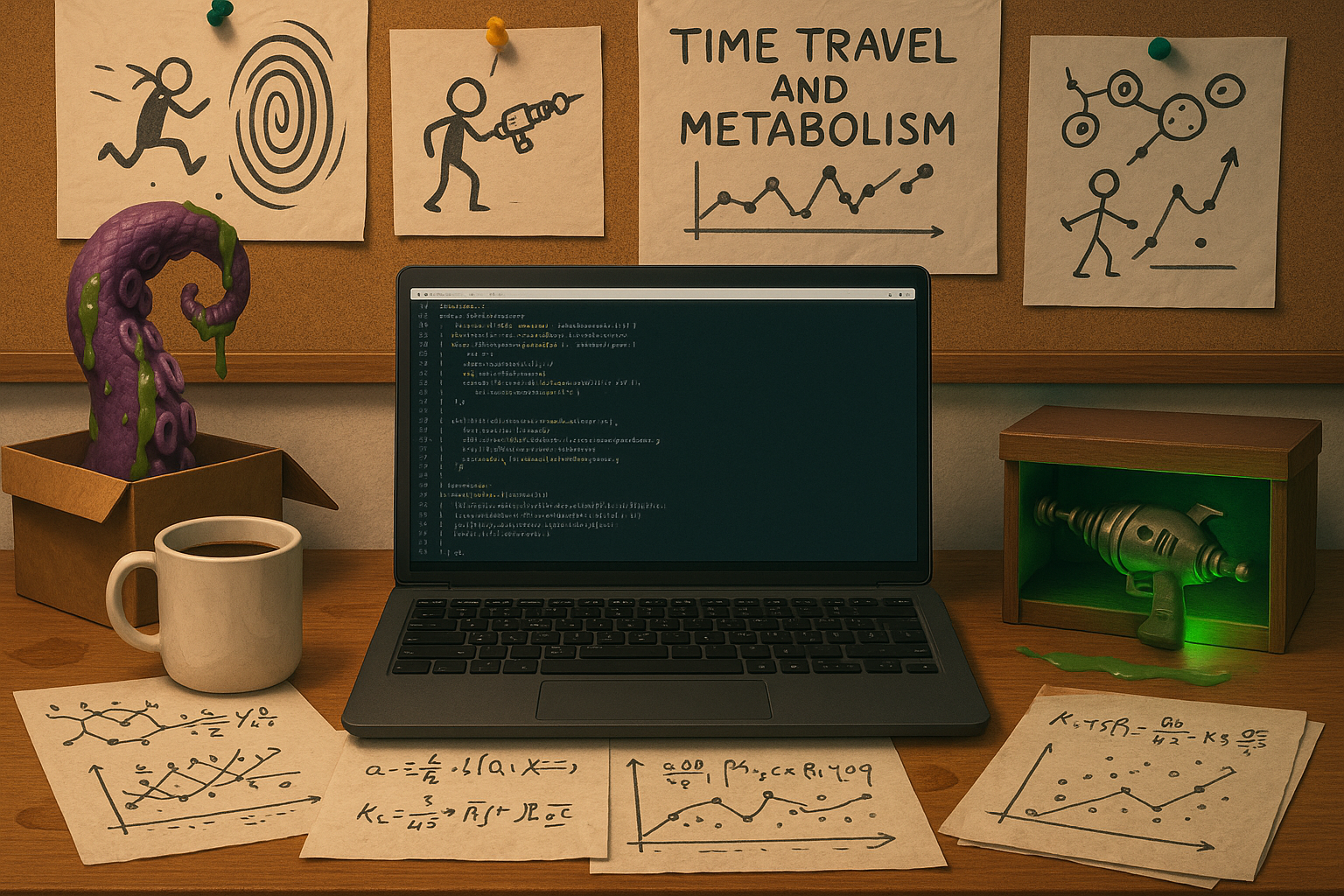
Welcome to my blog!
Wow. A visitor!! How on Earth did you end up here? Be honest, did you click on something dodgy? It happens to the best of us. Where are my manners! Let me introduce myself.
I'm Alex, a computing scientist based in NYC and somewhat of a modern day philosopher. This blog is about my various thoughts and projects that are unwilling to quietly collect dust at the back of my mind.
Whatever you find on here is the product of curiosity, introspection, some amount of thinking, and elbow grease of course.
Click around, you may find something you like.
How is stuff organized?
I don't like categories but also don't believe in having a miscellaneous drawer. Articles in Home are in chronological order of publishing. Tags generally show what sort of content you could find in the articles. Finally, Series groups articles with common context -- It's my favorite one so please check it out!
How did I end up doing this?
I'm a scientist. My job is to provide explanations to questions through the use of the scientific method. In practice, my style is picking and attacking problems by making tools that borrow from different disciplines. I just have the need to create. Sue me.
Started out as a white coat working in a lab on what can only be described as enzymology (the official titles make no sense anyway). I've always had a strong interest in light and studying how bacteria see color was pretty awesome. Obviously, I built quite a few light sources and even bioreactors, did some protein engineering, designed assays, that kind of stuff.
I've always coded but not for school. The few computing classes I took bored me out of my mind as there was a very little amount of playing around allowed. So I ended up teaching myself Python with Codecademy back in the day. Also thought myself some microcontroller stuff with Arduino. Still, I don't regret my choice of major because I learned how nature designs, codes, and optimizes. Most importantly -- I learned what works for me and what doesn't.
Working nights, weekends, and doing homework does not work for me.
Anyway, now that I think about it I've always been the kind of person who likes to optimize things through changing simple principles here and there, even philosophies (more on this another time). Less so about changing the amount of this and that but I did that also -- this just felt like something better suited for a machine to do. At the time I had no idea about solvers, modeling, mathematical programming, ODE simulations, etc.
My first real taste of optimization was when I was trying to diagnose a weird nutrient issue I was having with some bacterial cultures so I built a digital cell culture, operated it as ODEs and even optimized some things with a genetic algorithm.
I loved it so much that I've devoted my life to moving into full-time computing since then. Now I build digital cell cultures and perform mathematical programming and optimization for a living.
What do I actually do now?
My work focuses on optimizing the flow of substances through a network, sometimes called Flux Balance Analysis (or FBA) but I prefer the term graph optimization to stay field-agnostic. For the most part this involves linear programming and mixed-integers sprinkled in for flavor but I do quite a bit of non-linear stuff too on the side. Think of me as designing models and puppeteering optimization pipelines across hundreds of thousands of jobs on High-Performance Clusters.
I build mathematical models of systems, run experiments on many computers, and analyze the data to understand what is possible, what is likely, and what outcomes are optimal. I’m also interested in how models make decisions and develop tools and analyses that let me peek, to borrow the term from AI, into the black box.
You'd be surprised how many things outside of biology you could model as a graph optimization problem, I certainly was. To give you some examples think of: traffic patterns, supply chains, portfolio distributions, dietary requirements, player selection in sport, energy grids, orbital calculations and payload (KSP yes), architecture, electronics, and the list can go on for quite a bit. Of course, there's my favorite application of optimization -- time travel. I kid you not.
There are about 30 articles lying in my Obsidian vault focusing on the intersection of time travel, optimization, and AI. Maybe some if not all of them will be published by the time you read this.
What am I interested in next?
I've developed quite a keen interest on the intersection of ML and optimization and I'm drawn to various applications of knowledge graphs and AI. I'm interesting in developing technologies to do some cool new stuff with those. Maybe even working on more reliable forms of AI, ones with compliance-critical applications. If you share the same interests stop reading this and just hit me up on LinkedIn.
Although digital cell cultures, protein engineering, metabolic networks and the lab will forever have a special place in my heart, I'm not at all married to them and am in fact quite promiscuous with applying my skills elsewhere.
AI use
I'm a fan of AI in general but only using it for generating some of the images when it comes to this blog. Every tool has a purpose and developing your voice as a <insert-category> writer by having AI remix your thoughts is certainly not a good use in my opinion. Just wanted to get this out of the way. Stuff will be ugly, there will be typos, and that's ok because:
Style is our unique way in doing something wrong. -- (Unknown author)
Some trivia about me
Before coming to the US I lived in a few other countries, most recently Scotland, which I always speak fondly of. In fact, I'm rooting for Scotland in the FIFA world cup (I hope this ages reasonably well). This beautiful country was my home for more than a decade, and the University of Glasgow is where I completed my doctorate and higher education. Most of my work there was in photobiology.
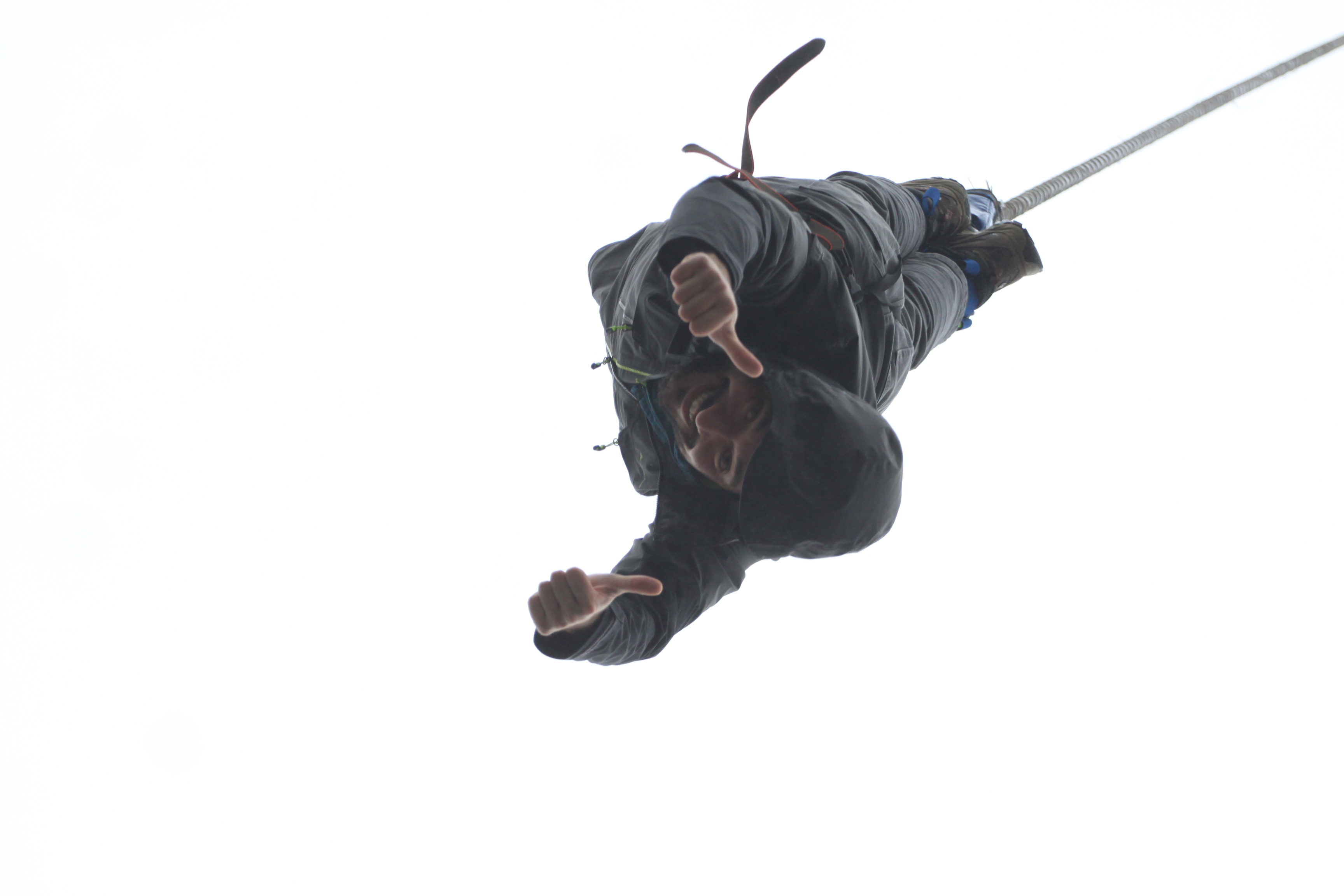
Some fun trivia about me: I once cycled across the western portion of the Scottish Highlands on a two-speed city bike. What started as an awesome adventure with a friend quickly turned into a survival experience brought on by the worst storm of my life.
Despite this, bungee jumping is still the scariest experience I’ve had, and I would absolutely do it again. I’ve also cycled 300 miles for Cancer Research UK dressed as Pikachu (not in a single trip).
If money were no concern, I would probably spend my life raising funds for good cause and tackling ambitious projects.
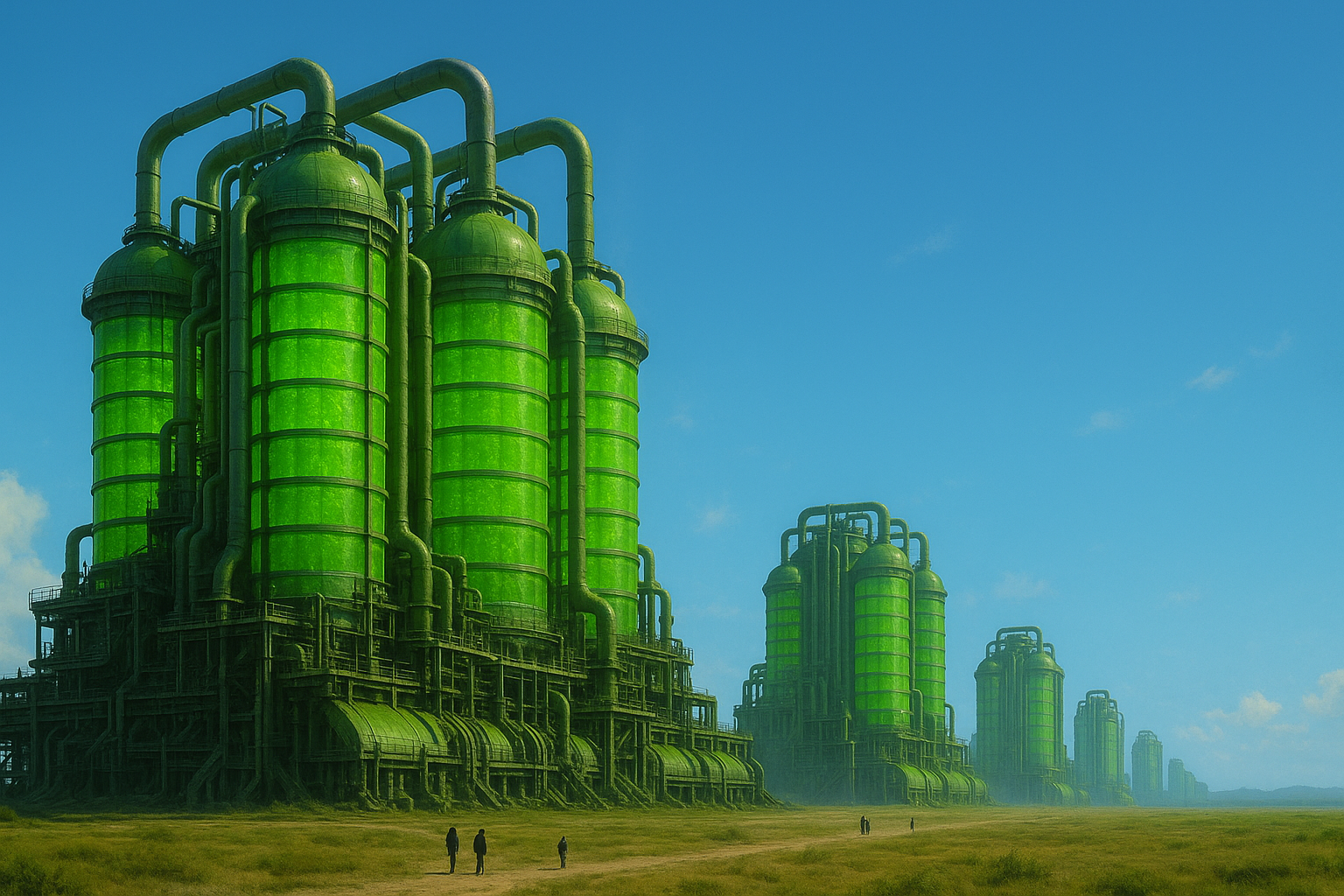
The reason I became a scientist was my interest in terraformers, whether for other planets, space habitats, or Earth. Some questionable napkin math I did in college suggested we could offset our carbon footprint with a dozen large tubular bioreactors, each the volume of Loch Lomond, and a few decades of a defense-sized budget.
When I’m not daydreaming about projects that would bankrupt a large nation, I keep things simple with walks, journaling, meditation, and dance lessons.
There is RSS
There's an RSS feed. Just saying. Everything's in the feed because I don't run ads and track you. I couldn't care less what browser you use lol.